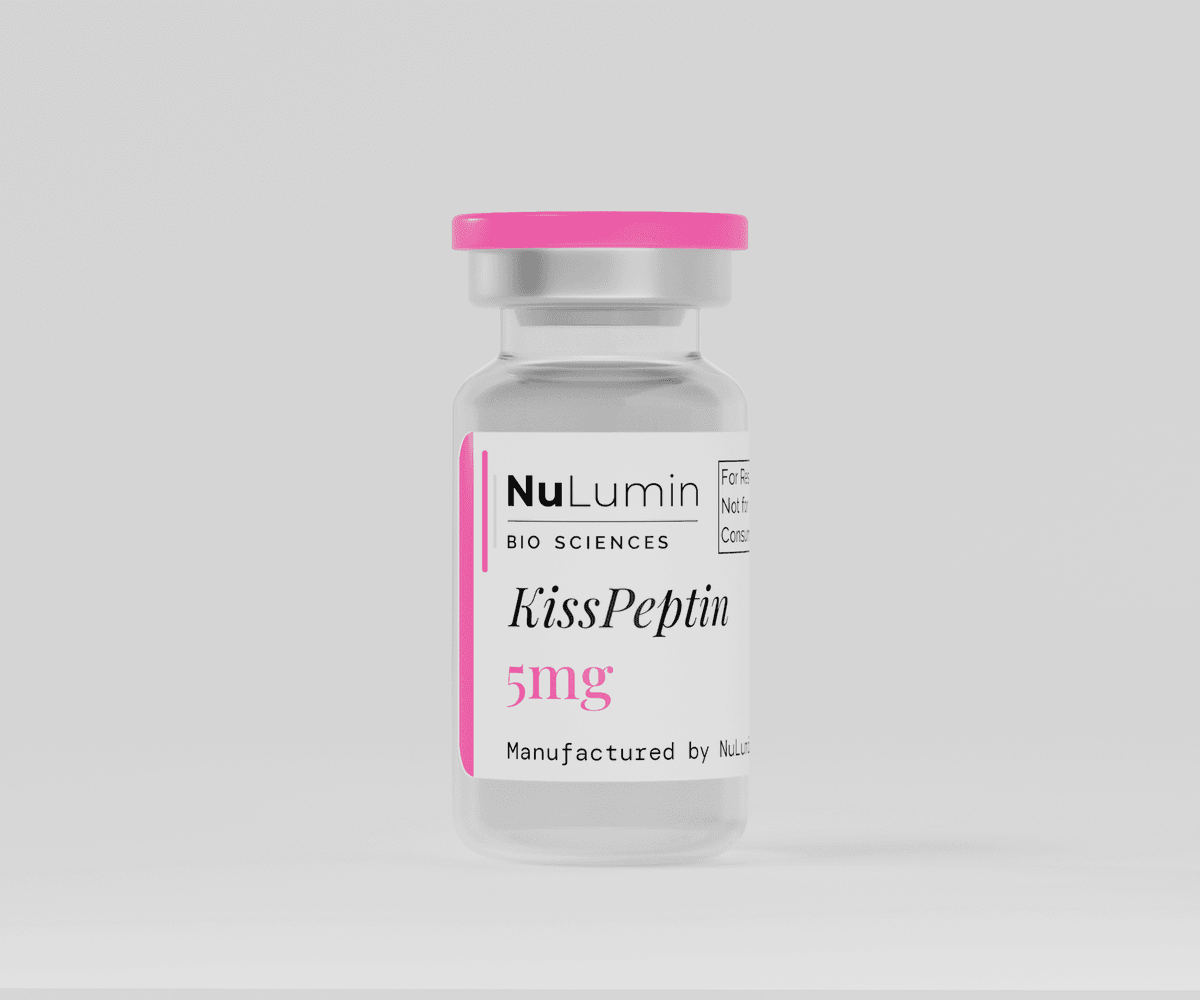
A peptide made from the KISS1 gene, studied for its role in activating the neurons that drive the reproductive hormone system. For research use only.
Mechanism of Action
A signaling peptide studied for how it switches on the brain circuits that control reproductive hormones.
Research Applications
GPR54 receptor studies
Reproductive endocrinology
GnRH signaling research
Research Studies
Kisspeptin-10 is a potent stimulator of LH and FSH release through hypothalamic GnRH neurons in both male and female rodents[1]
This study established kisspeptin-10's position as the most potent known activator of the HPG axis by characterizing its concentration-response relationship for LH and FSH secretion in male and female rats. Intravenous kisspeptin-10 at concentrations as low as 1 nmol/kg elicited robust LH surges within five minutes, exceeding the LH response to equipotent concentrations of GnRH. The response was blocked by a GnRH receptor antagonist (cetrorelix), confirming that kisspeptin-10 acts upstream of GnRH neurons rather than directly on pituitary gonadotrophs. Hypothalamic GnRH release measured by push-pull perfusion increased 3- to 5-fold following kisspeptin-10, consistent with a hypothalamic site of action.
Last verified: 2026-04-03
Loss-of-function mutations in KISS1R cause autosomal recessive hypogonadotropic hypogonadism, establishing kisspeptin as an essential HPG regulator[2]
This landmark genetic study identified homozygous loss-of-function mutations in the KISS1R gene (encoding the kisspeptin receptor GPR54) in consanguineous families presenting with idiopathic hypogonadotropic hypogonadism and failure to undergo puberty. Affected individuals had low LH, FSH, and sex steroid levels despite normal GnRH neuronal anatomy and normal pituitary responses to exogenous GnRH. Heterologous expression of mutant KISS1R in HEK293 cells confirmed complete loss of kisspeptin-10 binding and downstream IP3 signaling. The causal link between KISS1R loss and pubertal failure provided definitive evidence that kisspeptin signaling is essential for HPG axis activation.
[2]de Roux N, Genin E, Carel JC, Matsuda F, Chaussain JL, Milgrom E. Proceedings of the National Academy of Sciences. 2003.doi:10.1073/pnas.0337600100
Storage & Form
Form
Lyophilized Powder
Purity
≥98%
MW
1302.49 Da
-20°C, protected from light and moisture
Research Use Only
For Research Use Only. Not for Human Consumption. Not a drug, supplement, or food product. All NuLumin Bio-Sciences products are designated Research Use Only (RUO). Not intended for therapeutic use or diagnostic purposes. Purchasers assume responsibility for ensuring compliance with all applicable regulations.
Add to Cart
Price$45.00
1 unit$45.00/ea
5+ units −10%$40.50/ea
10+ units −20%$36.00/ea
Pricing
5mg$45.00
10mg$65.00
For Research Use Only. Not for Human Consumption.
Quality Standards
≥98% HPLC-verified purity
Mass spectrometry identity confirmation
Batch-specific COA included
US-based cGMP manufacturing
Related Compounds
More in Endocrine Research
Endocrine
Popular
CJC-1295 (No-DAC)
5mg · 10mg
From $45.00
What it is
A lab-made version of a natural hormone (GHRH), studied for how it prompts growth-hormone release in natural-looking pulses.