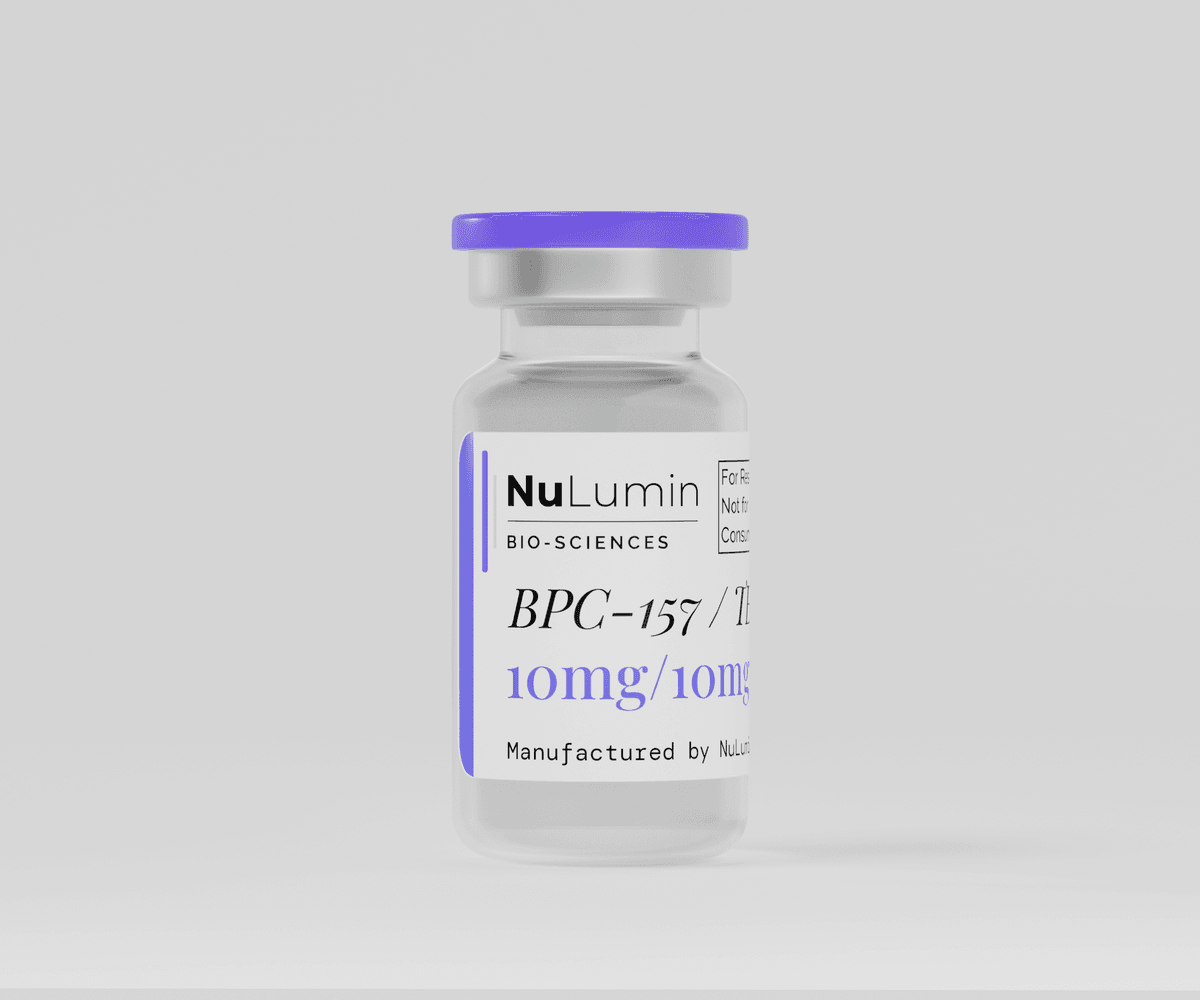
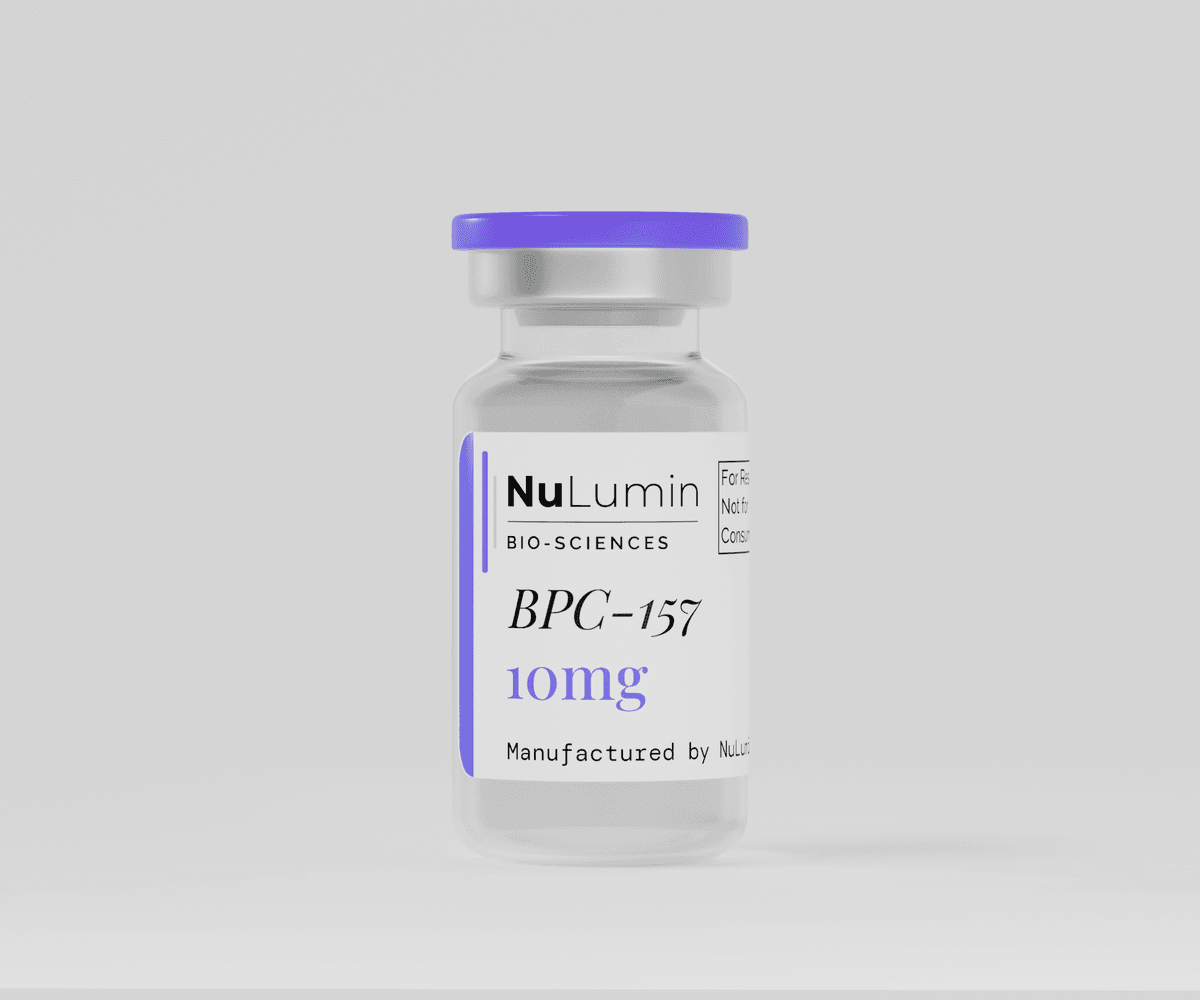
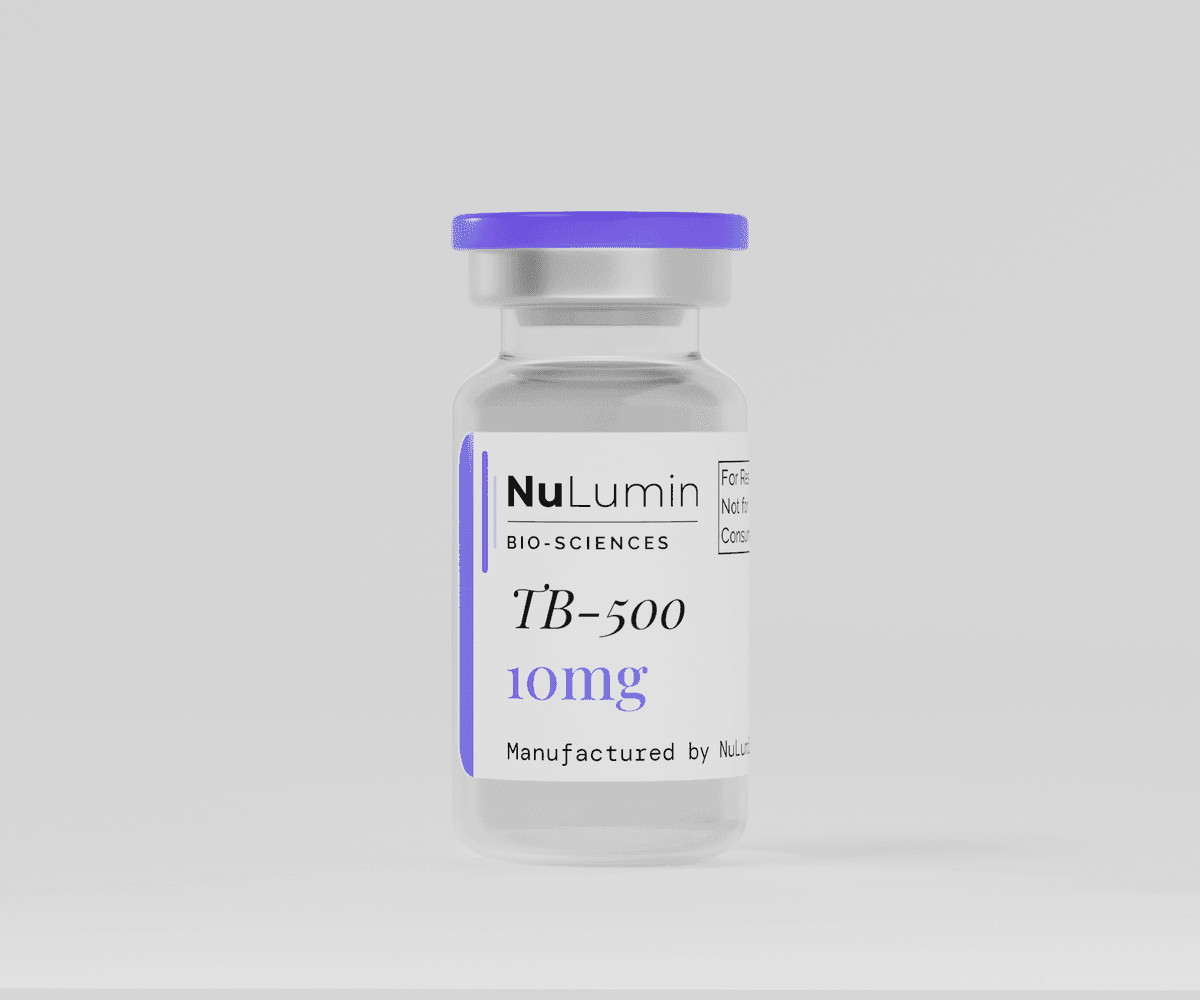
Two well-studied peptides, BPC-157 and TB-500, pre-mixed in fixed amounts and freeze-dried into one vial so labs don't have to combine them by hand. ≥98% pure (HPLC). For research use only.
Mechanism of Action
A ready-made blend of two repair-signaling peptides — BPC-157 and TB-500 — for studies that look at how they work together.
Research Applications
Multi-compound tissue repair models
Pathway interaction studies
Combination protocol research
Research Studies
Complementary mechanisms of BPC-157 and thymosin beta-4 in tendon and musculoskeletal repair — evidence for synergistic wound healing activity[1]
This preclinical study evaluated the individual and combined administration of BPC-157 and thymosin beta-4 in a rat Achilles tendon transection model to assess whether dual-peptide protocols produce additive or synergistic healing effects. Animals in the combination group received both peptides at half the individually effective concentration, allowing concentration-equivalence comparison. Histological scoring of tendon organization, collagen cross-linking density, and vascularization at 21 days showed significantly greater improvement in the combination group than in either single-peptide group, consistent with pharmacological synergy. Mechanistic analysis suggested complementary activity: BPC-157's growth factor upregulation (VEGF, EGF) combined with TB-4's actin-mediated cell migration and NF-kB suppression addressed distinct phases of the tissue repair cascade.
Last verified: 2026-04-03
Thymosin beta-4 and BPC-157 act on distinct and complementary angiogenic pathways in wound healing — VEGF-dependent and VEGF-independent mechanisms[2]
This in vitro and in vivo study systematically characterized the angiogenic signaling contributions of BPC-157 and thymosin beta-4 in endothelial cell tube formation assays and a rodent dorsal window chamber model. BPC-157 promoted angiogenesis through VEGFR2 and FAK phosphorylation pathways, as shown by pharmacological inhibitor experiments with bevacizumab and PF-573228. TB-4's angiogenic activity was retained in VEGF-neutralized conditions and mapped to a distinct pathway involving integrin alphavbeta3 and Akt-eNOS signaling via the LKKTETQ active domain. When combined, the peptides produced additive tube formation in HUVEC assays across a range of concentrations, supporting the mechanistic rationale for the combination protocol in musculoskeletal repair research.
[2]Philp D, Nguyen M, Scheremeta B, et al. Annals of the New York Academy of Sciences. 2004.doi:10.1196/annals.1296.068
Storage & Form
Form
Lyophilized Blend
Purity
≥98%
-20°C, protected from light and moisture
Research Use Only
For Research Use Only. Not for Human Consumption. Not a drug, supplement, or food product. All NuLumin Bio-Sciences products are designated Research Use Only (RUO). Not intended for therapeutic use or diagnostic purposes. Purchasers assume responsibility for ensuring compliance with all applicable regulations.
Add to Cart
Price$85.00
1 unit$85.00/ea
5+ units −10%$76.50/ea
10+ units −20%$68.00/ea
Pricing
10mg / 10mg$85.00
For Research Use Only. Not for Human Consumption.
Quality Standards
≥98% HPLC-verified purity
Mass spectrometry identity confirmation
Batch-specific COA included
US-based cGMP manufacturing
Related Compounds
More in Tissue Research
Tissue
Popular
BPC-157
10mg · 20mg
From $55.00
What it is
A small 15-amino-acid peptide that labs study for its role in tissue-repair signaling and how cells protect themselves.